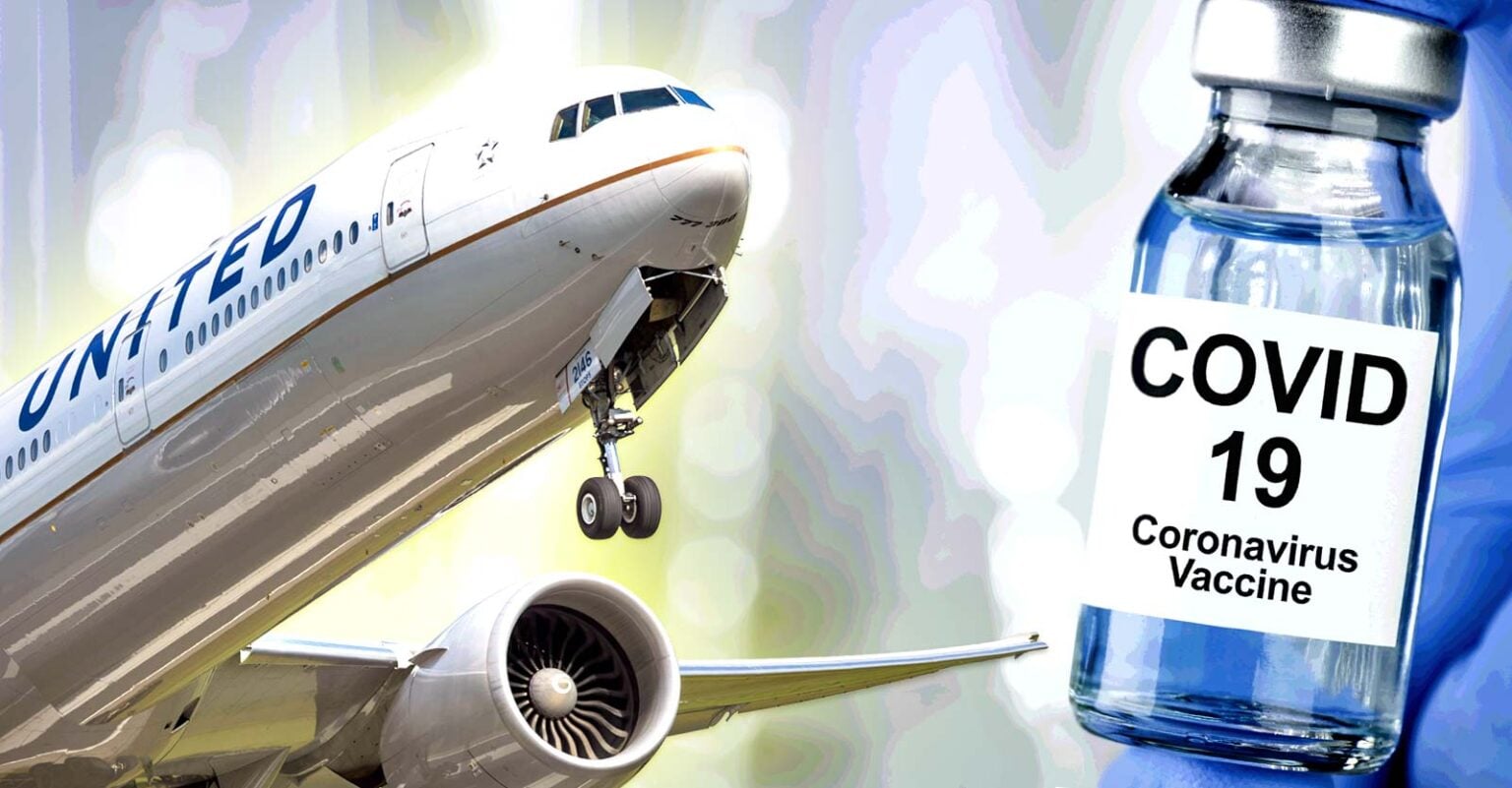
Genise Kincannon and David Castillo may proceed with their lawsuit after the US Court of Appeals for the Fifth Circuit (24-10708) made a decision certifying a modified subclass of religious-accommodation seekers whom United Airlines accommodated with unpaid leave.
In the Order detailed below, one part of the discussion caught my eye:
“Religious Sincerity as a Common Issue” (p. 35-37).
The Judges wrote in relevant parts,
“To be “common,” a question “must be of such a nature that it is capable of classwide resolution.” That is, it must “resolve an issue that is central to the validity of” each class member’s claims “in one stroke.” Yet evaluating religious sincerity requires a court to inquire into each individual’s “own scheme of things.” Thus, one person’s religious beliefs reveal little about another’s. Religious conviction, after all, is no herd phenomenon but a matter of individual conscience. Religious beliefs need not be shared by others, nor must they be “acceptable, logical, consistent, or comprehensible to others.” Courts may not evaluate “the ‘truth’ of a belief,” but we must determine whether it is “truly held.”
As a result, “[t]he sincerity of a person’s religious belief is a question of fact unique to each case.” Evidence about one person’s beliefs therefore sheds little light on anyone else’s—including a co-worker’s in a religiously diverse workplace. And because sincerity “is largely a matter of individual credibility,” it ordinarily “demands . . . the opportunity for the factfinder to observe the claimant’s demeanor during direct and cross-examination.”…..While an issue may be common when “the same evidence will suffice for each member to make a prima facie showing,” what these class members have is not the same evidence; it is merely evidence of the same type. There is not one piece of evidence that is even relevant across the board, let alone “suffic[ient] for each member to make a prima facie showing” of sincerity. “
(citations omitted)
**********************************
It seems to me that any effort to flesh out the sincerity of an individual’s religious belief concerning vaccination against COVID was missing in the termination process used against public employees in the City of New York. True, the case cited above involves the private sector, however, the “sincerity” standard is required in the negotiation process involving public employees and should be given the same scrutiny.
Indeed, in New York City, requests for religious accommodations/exemptions were denied under policies that reject personal beliefs if they deviate from institutional religious leaders’ views. For example, if a Catholic worker requests a religious accommodation so that [s]he does not have to get vaccinated against COVID but the Pope tells all Catholics they should get the vaccine, then the request must be denied. This policy not only contradicts Constitutional Law but also allows government to compare a person’s sincerity to a religious hirerachy. This is absurd.
There is no question that the DOH and other City agency directors forced all public employees in New York City to get the COVID vaccine or be terminated. All the offers of applying for accommodations were fraudulent and meaningless.
We just witnessed the biggest, unConstitutional public employment scam in New York City history.
Betsy Combier
A class action lawsuit against United Airlines over the airline’s COVID-19 vaccine religious exemption policy can move forward, a federal appeals court ruled this week. The appeals court upheld a lower court’s 2024 ruling that United discriminated against the employees by placing them on unpaid leave after granting their religious exemptions to the vaccine.
March 13, 2026
A class action lawsuit against United Airlines over the airline’s COVID-19 vaccine religious exemption policy can move forward, a federal appeals court ruled this week.
The 5th U.S. Circuit Court of Appeals upheld a lower court’s 2024 ruling that United discriminated against the employees by placing them on unpaid leave after granting their religious exemptions to the vaccine.
The lawsuit involves 2,221 employees who form “the core of the class action lawsuit,” according to Aviation A2Z.
Two other employee subclasses originally sued United: employees who applied for a religious or medical exemption and were at risk of being placed on unpaid leave or fired, and a group of employees who were allowed to continue working only if they complied with the airline’s masking and testing requirements.
In its 2024 ruling, the U.S. District Court for the Northern District of Texas, Fort Worth Division, denied class-action certification for the two subclasses. The 5th Circuit this week upheld that portion of the lower court’s ruling, but allowed the “unpaid leave” subgroup to form a class and proceed to trial.
According to The Traveler, this “closely watched” lawsuit “is one of the most prominent private-sector challenges to a corporate vaccine mandate to reach this stage.”
A judgment in favor of the workers “could encourage similar suits against other large employers that relied on unpaid leave or job reassignments as tools to enforce coronavirus safety rules,” The Traveler reported.
The case will now go back to the District Court for discovery and a jury trial.
As of now, United has not been found liable for any wrongdoing. But according to the Tampa Free Press, the 5th Circuit’s ruling “sets the stage for a high-stakes trial focused on the airline’s treatment of religious objectors.”
Attorneys for the plaintiffs did not respond to The Defender’s request for comment.